A few years ago, I thought starting an online business meant building a complicated website, hiring freelancers, and spending thousands of dollars before making a single sale. Every YouTube video seemed to show people with expensive setups and huge teams. It was discouraging.
Then I started experimenting with AI tools.
At first, I made the same mistake many beginners make—I tried every new AI tool I could find. I spent more time testing software than actually building something. After wasting weeks jumping between platforms, I realized something important:
AI is only useful when it helps solve a real problem.
Once I focused on that, everything became much simpler.
If you’re looking for practical AI business ideas that don’t require years of experience or a huge investment, this guide will give you realistic options you can actually start.
Why AI Makes Starting a Business Easier
The biggest advantage of AI isn’t that it replaces people. It removes many of the repetitive tasks that usually stop beginners from taking action.
Instead of spending hours writing content, designing graphics, researching keywords, or answering customer questions, AI can help you finish those jobs much faster.
That means you can spend more time finding customers and improving your business instead of getting stuck doing everything manually.
The best part is that many AI tools offer free plans, making it possible to start with very little money.
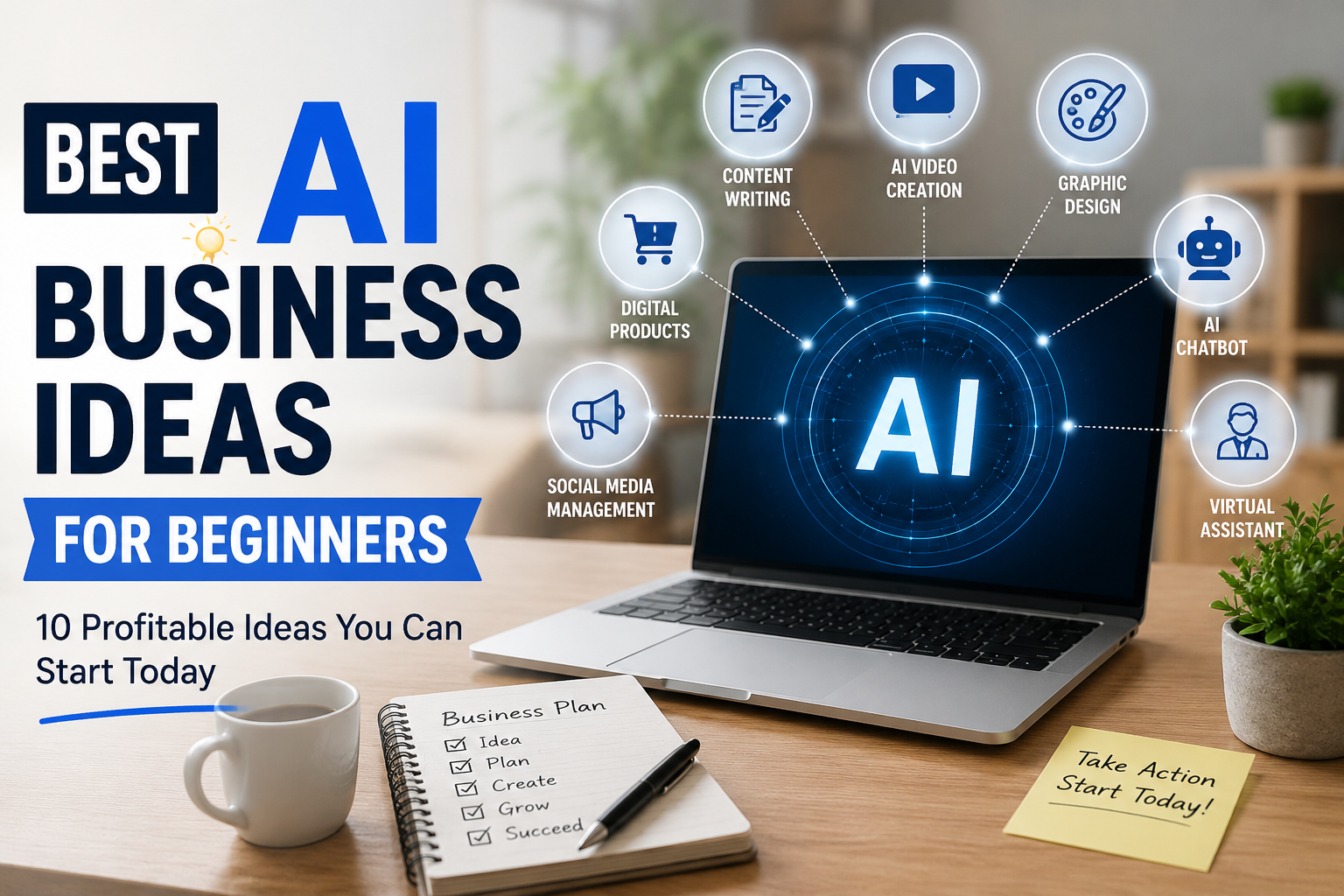
1. Start an AI Content Writing Business
Businesses constantly need fresh content.
They need blog posts, website pages, product descriptions, newsletters, and social media captions. Many small business owners don’t have the time to write everything themselves.
With tools like ChatGPT, Claude, and Grammarly, you can speed up your writing process while still adding your own editing and research.
How to start
- Pick a niche like travel, finance, fitness, or technology.
- Learn basic SEO.
- Build a few writing samples.
- Offer services on Fiverr, Upwork, or LinkedIn.
- Ask happy clients for testimonials.
The biggest lesson I learned is that clients don’t pay for AI-generated text—they pay for clear, useful content that sounds human.
Always edit, fact-check, and personalize your work.
2. Build an AI-Powered Blog
Blogging still works, but creating quality articles consistently can take a lot of time.
AI helps with:
- Topic research
- Outlines
- Keyword ideas
- Headline suggestions
- Grammar improvements
Instead of publishing dozens of low-quality articles, focus on creating fewer articles that genuinely help readers.
Popular monetization methods include:
- Google AdSense
- Affiliate marketing
- Sponsored posts
- Digital products
The combination of AI and SEO can significantly reduce the time needed to publish useful content.
3. Sell AI-Generated Digital Products
Digital products are one of the easiest businesses to scale because you create them once and sell them repeatedly.
Examples include:
- Printable planners
- Resume templates
- Budget spreadsheets
- Notion templates
- Study guides
- Business checklists
- Social media templates
AI can help generate ideas, organize information, and even create design elements.
You can sell these products on Etsy, Gumroad, or your own website.
4. AI Social Media Management
Many local businesses know they should post regularly on Facebook, Instagram, or LinkedIn, but they rarely have time.
This creates a great opportunity.
Using AI, you can quickly create:
- Weekly content calendars
- Post captions
- Hashtag suggestions
- Image ideas
- Short video scripts
You still need creativity and strategy, but AI dramatically reduces the time spent creating content.
Start with small businesses like restaurants, gyms, dentists, or local stores.
5. Create AI Videos for Businesses
Short videos are everywhere.
Businesses need videos for:
- TikTok
- Instagram Reels
- YouTube Shorts
AI video tools make production much easier.
You can create:
- Product explainers
- Promotional videos
- Educational clips
- Customer testimonials
- Animated presentations
Learning simple video editing alongside AI gives you a valuable service you can sell.
6. Offer AI Graphic Design Services
You don’t need to become a professional designer overnight.
AI image generators combined with beginner-friendly design tools allow you to create:
- Social media graphics
- Posters
- Blog featured images
- Pinterest pins
- Business presentations
- Marketing materials
Remember that AI-generated designs usually need adjustments.
Adding your own creativity makes the final product much stronger.
7. Launch an AI Virtual Assistant Business
Many entrepreneurs spend hours answering emails, organizing files, scheduling meetings, and managing spreadsheets.
An AI-assisted virtual assistant can handle many of these repetitive tasks more efficiently.
Services may include:
- Email management
- Calendar scheduling
- Research
- Data entry
- Customer support
- Meeting summaries
As your experience grows, you can charge higher rates.
8. AI Resume and LinkedIn Optimization
Job seekers want resumes that stand out.
AI can help analyze resumes, improve wording, and suggest stronger achievements.
You can also optimize:
- LinkedIn profiles
- Cover letters
- Professional bios
This business works especially well if you understand recruitment or HR.
9. AI-Powered Online Course Creation
People love learning online.
If you have knowledge in any area—fitness, cooking, marketing, language learning, finance, photography—you can build an online course.
AI helps with:
- Course outlines
- Lesson planning
- Presentation slides
- Quizzes
- Worksheets
- Scripts
You still need your own expertise, but AI saves countless hours.
10. AI Chatbot Setup Service
Small businesses increasingly want chatbots on their websites.
These bots answer common questions, collect leads, and provide customer support around the clock.
Many business owners don’t know how to set them up.
Learning one chatbot platform can become a profitable service business.
Potential clients include:
- Clinics
- Restaurants
- Law firms
- Home service companies
- Real estate agencies
- E-commerce stores
Step-by-Step Plan to Start Your First AI Business
If you’re completely new, don’t try all ten ideas at once.
Here’s a simple roadmap.
Step 1: Pick One Skill
Choose one service that matches your interests.
Examples:
- Writing
- Graphic design
- Video editing
- Social media
- Virtual assistance
Avoid switching ideas every few days.
Step 2: Learn One AI Tool Well
It’s better to master one tool than barely understand ten.
Spend a week practicing daily.
Create sample projects even if you don’t have clients yet.
Step 3: Build a Small Portfolio
People want proof.
Create examples like:
- Blog articles
- Social media posts
- Logos
- Videos
- Presentations
A small but polished portfolio is far more effective than claiming you’re an expert.
Step 4: Find Your First Client
You don’t need hundreds of clients.
Focus on getting your first one.
Reach out through:
- Facebook groups
- Fiverr
- Upwork
- Local businesses
- Personal connections
The first client teaches you more than dozens of tutorials.
Step 5: Improve With Feedback
Every project reveals something new.
Maybe your communication needs improvement.
Maybe clients want faster delivery.
Maybe they need additional services.
Listen carefully and keep improving.
Real Examples of AI Businesses
Here are a few realistic examples.
Example 1
A freelance writer uses AI to create outlines and research, then personally edits every article before delivery.
The result is faster production without sacrificing quality.
Example 2
A Pinterest marketer creates AI-assisted graphics and sells template bundles online.
Each sale becomes passive income after the initial work.
Example 3
A small agency manages social media for local restaurants using AI to draft captions and schedule content.
The agency still adds photography, branding, and strategy.
Example 4
A virtual assistant uses AI to summarize meetings, organize emails, and create reports for busy business owners.
Instead of replacing the assistant, AI makes the service more valuable.
Common Mistakes Beginners Make
Depending Completely on AI
AI makes mistakes.
Always verify facts, numbers, names, and references before publishing anything.
Trying Too Many Tools
New AI software appears almost every week.
You don’t need them all.
Master a few reliable tools before exploring new ones.
Ignoring Customer Needs
Clients care about results, not which AI software you used.
Focus on solving their problems.
Charging Too Little
Many beginners underprice themselves.
It’s okay to start with competitive rates, but increase your pricing as your experience and portfolio grow.
Skipping Human Editing
Raw AI output often sounds repetitive or generic.
Editing adds personality, accuracy, and originality.
That’s what clients value.
Helpful AI Tools for Beginners
Here are some beginner-friendly tools worth exploring:
- ChatGPT for brainstorming, writing, and research assistance.
- Claude for drafting long-form content and organizing information.
- Canva AI for presentations, social media graphics, and marketing materials.
- Grammarly for grammar and writing improvements.
- Notion AI for note-taking, planning, and organizing projects.
- Perplexity AI for research and finding sources quickly.
- CapCut AI for creating and editing short videos.
- Gamma for generating professional presentations.
Most of these platforms offer free versions, making them ideal for testing different workflows before paying for premium features.
Final Thoughts
Starting an AI business doesn’t require a computer science degree or years of experience. What matters most is choosing one problem to solve and consistently delivering quality work.
AI can save time, spark ideas, and automate repetitive tasks, but your creativity, judgment, and understanding of your customers are what truly make a business successful.
If you’re just getting started, keep things simple. Pick one idea from this list, learn the tools you need, create a few examples, and start reaching out to potential clients. You don’t need everything to be perfect before you begin. Small, consistent steps often lead to much bigger opportunities than waiting for the “right” moment.